
The best age for children to learn English: why start early?
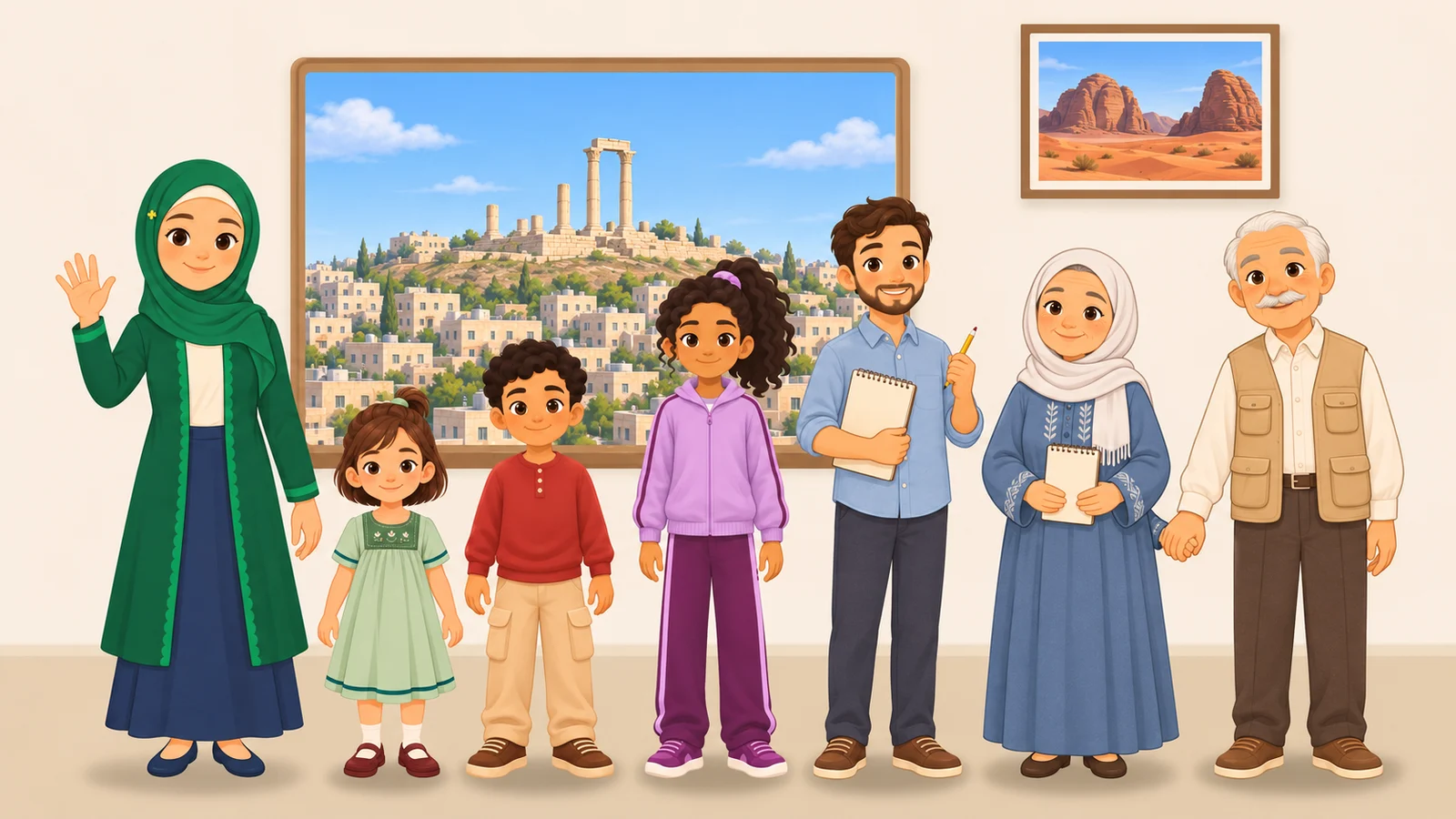
“Isn’t my child still too young for English?” is one of the questions parents ask most. The short answer: childhood is the best time for your children to start their journey with the language. In this article we explain what research says about an early start, and why there is no need to worry about Arabic.
Childhood is a golden window for learning a language
In 2018, researchers from MIT and Harvard published a large study with 669,498 participants, using an online grammar test [1]. The study found that the ability to learn a language’s grammar is at its strongest during childhood and adolescence, stays strong until about age 17.4, and then gradually begins to decline [1].
In other words, the childhood years are when the brain is most ready to learn a language. The earlier your children start, the more years they spend inside this window.
An early start means more time with the language
Researcher Carmen Muñoz explains that the amount and quality of the language a child hears have a strong effect on their learning [3]. And young children learn through listening, interaction and play more than through explanation [2].
This is where the power of an early start shows: a child who starts at 4 or 5 gathers extra years of listening, speaking and interacting as they grow up. Those years make the difference.
Young children love learning more
An early start builds not only the language but a love for it. In a study in England of children learning a foreign language, 96% of five-year-olds liked learning [2]. The researcher says that one hour a week may be enough to plant a love of languages that stays with the child [2].
A child who loves the language when young keeps going with it as they grow, and that enthusiasm is what turns classes into a real level of English.
Can a child learn two languages at once? Will Arabic suffer?
Yes, they can. The American Speech-Language-Hearing Association (ASHA) says children can learn more than one language [4], and that the way they learn depends on how much of each language they hear and how much they practise using it [4]. It adds that mixing words from two languages is an expected, normal part of learning [4], and advises parents to talk with their children in the language they are most comfortable with [4].
In other words, English comes in addition to Arabic, not instead of it. Keep talking and reading with your children in Arabic at home, and their English grows alongside it.
How to start in practice
- Start early and make it fun: from about age 4, with songs, games and words from their daily life.
- Keep it regular: a little learning, repeated through the week, is better than one long session now and then, because the amount of exposure to the language is a key factor [2][3].
- Focus on speaking: a child learns more when they speak and get a reply, not only when they listen [2].
- Keep up the Arabic: talking and reading in Arabic at home carry on as they are [4].
Where does Mutamayyez come in?
Mutamayyez is a Jordanian educational platform offering live, one-to-one English classes for children aged 4 to 16, inside the Mutamayyez app [5]. Each class lasts 25 minutes with a qualified teacher, with games and songs that make learning fun [5]. In the free trial class, the teacher assesses each child’s level, and then we prepare a study plan that suits them [5][6].
Start your children’s journey with English early, and follow the Mutamayyez pages to be the first to know when booking opens.
Frequently asked questions
What is the right age to start teaching a child English? The earlier, the better. The ability to learn a language is very strong during childhood and adolescence [1], and young children love learning and enjoy it [2]. From age 4 you can start in a fun, regular way.
Does learning English early harm a child’s Arabic? No. Children can learn more than one language, and mixing some words while they learn is expected and normal [4]. Keep speaking Arabic at home.
My son is 10. Has he missed the window? No. The ability to learn a language stays strong into the teenage years [1]. What matters is that he starts now with a regular plan.
Are 6 months enough to learn English? That depends on how much learning happens each week and on the starting point. The amount and regularity of exposure to the language are what make the difference [2][3].
From what age do Mutamayyez classes start? From 4 to 16, with an approach and content for each age [5].
Sources
- Hartshorne, Tenenbaum & Pinker (2018). A critical period for second language acquisition. Cognition 177. https://pubmed.ncbi.nlm.nih.gov/29729947/
- Myles, F. (2017). Learning foreign languages in primary schools: is younger better? MEITS, University of Cambridge. https://www.meits.org/policy-papers/paper/learning-foreign-languages-in-primary-schools-is-younger-better
- Muñoz, C. (2008). Symmetries and asymmetries of age effects in naturalistic and instructed L2 learning. Applied Linguistics 29(4). https://eric.ed.gov/?id=EJ820241
- ASHA. Learning More Than One Language. https://www.asha.org/public/speech/development/learning-more-than-one-language/
- Mutamayyez website. https://mutamayyez.com/?lang=en
- Terms and conditions, Mutamayyez. https://mutamayyez.com/terms?lang=en
Mutamayyez is a Jordanian, Arab platform for learning English